

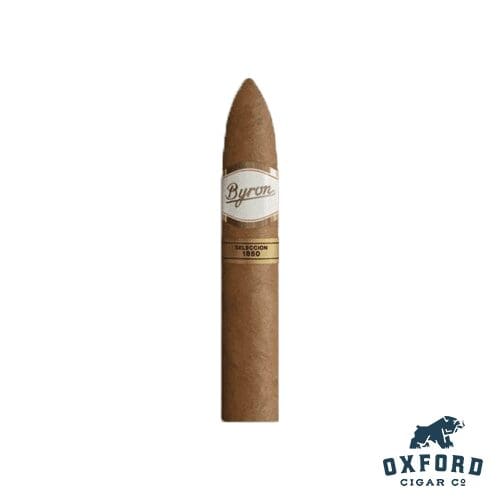
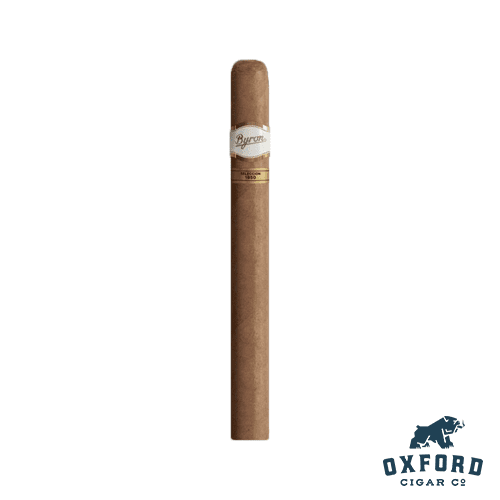
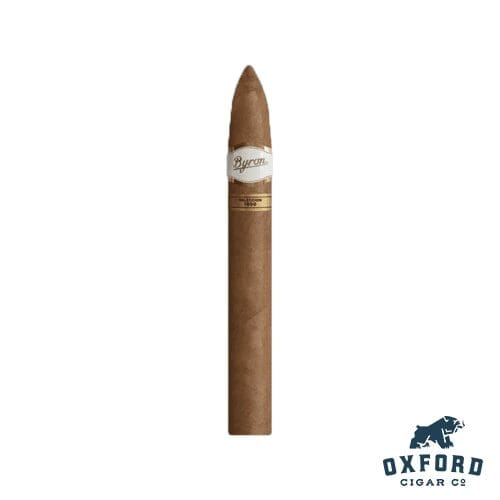
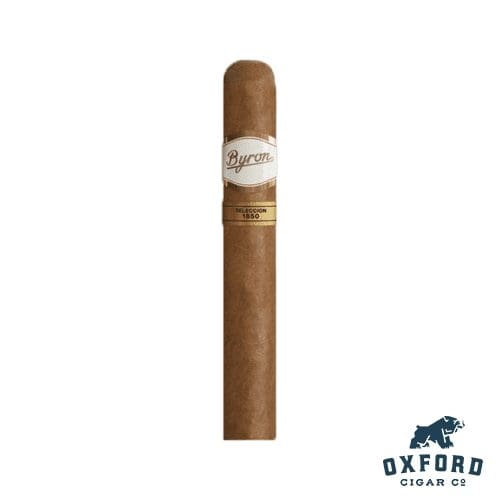
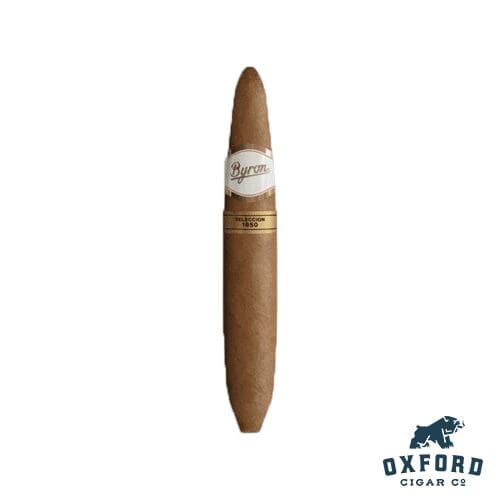


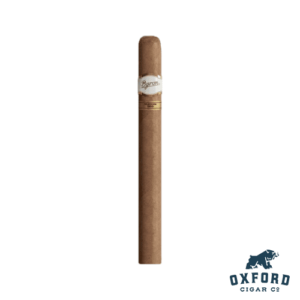
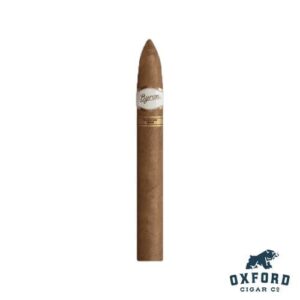
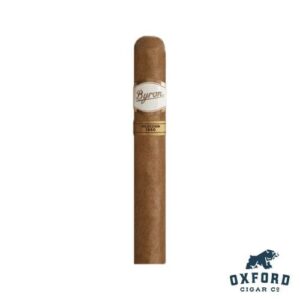
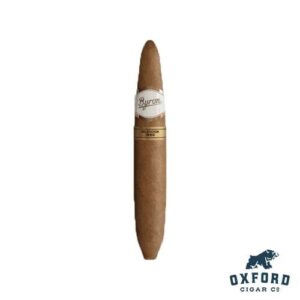
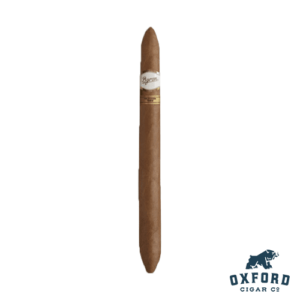
Byron 1850
Price range: $1,099.99 through $1,549.99
Byron 1850 — a premium Cuban-heritage expression in the Byron line, honoring 1850s Havana cigar tradition. Medium-bodied boutique cigar with Habano wrapper and classic Cuban character.
Volume Discounts
- Buy 2+ and save 5%
- Buy 3+ and save 10%
Curated by Oxford Cigar Company. Ships from Orlando, FL.
Frequently Bought Together
 If you purchase this product you will earn
 Byron 1850
The Byron 1850 is handmade at Tabacos de Costa Rica in Santiago de Puriscal, Costa Rica, wearing an Ecuadorian wrapper over a Peruvian binder and fillers from the Dominican Republic and Nicaragua. What separates the 1850 from every other cigar in the Byron line, and from nearly every cigar on the market, is what happens after the cigars are rolled. Each Byron 1850 rests for a minimum of five years in a multi cedar aging room lined with five distinct cedar varieties (Cuban, Spanish, Brazilian, Mexican, and Lebanese), followed by a secondary aging period with French Oak. That dual stage aging process, five years minimum, is not marketing language. It is the reason the cigar costs what it costs, and it is the reason the flavor profile carries a depth and mellowness that newly rolled cigars cannot replicate. Halfwheel’s three sample review of the No. 2 captured the effect precisely: “a nutty profile that seems to have a bit of terroir and wood lingering in the background,” with “dry oak,” “toasted wood,” and an “upping the complexity of the cigar quite impressively” that builds across the smoking experience. Cigar Coop scored the Grand Bouquet a 90 and awarded it the Cigar Coop Standard of Excellence, noting key flavors of “earth, oak, cocoa, natural tobacco, cedar, pepper.” Available in three vitolas, sold in boxes of 25, distributed by United Cigars.
- Wrapper: Ecuadorian natural, light brown (Colorado Claro). Smooth with a fine grain and a soft sheen. Halfwheel detected “mixed nuts and dry oak” from the wrapper aroma alone.
- Binder: Peruvian. An uncommon leaf in premium cigars that adds a distinctive character to the blend. Peruvian tobacco is known for contributing unique flavor depth when used as a binder.
- Filler: Dominican Republic (Seco and Volado) and Nicaraguan (Ligero). The Dominican tobaccos provide the creamy, nutty base while the Nicaraguan Ligero adds body and occasional pepper.
- Factory: Tabacos de Costa Rica, Santiago de Puriscal, Costa Rica. The same facility that produces Atabey and Bandolero cigars for Selected Tobacco S.A.
- Aging: Minimum five years post roll. First stage in a multi cedar room (Cuban, Spanish, Brazilian, Mexican, and Lebanese cedar). Second stage with French Oak. The cedar and oak compounds absorb into the tobacco over time, creating flavor dimensions that cannot be blended into a cigar at the factory.
- Strength: Mild to medium. Halfwheel confirmed “strength is in the mild range” with “no feelings of nicotine in the early going.” Body is medium. Flavor intensity builds from medium to medium full.
- Construction: Generally excellent smoke output, even burn, and firm ash, though halfwheel noted draw variation across samples in the tapered No. 2 vitola. Cigar Coop rated the Grand Bouquet’s draw as “excellent” and its finish as “excellent.”
- Core Flavors: Dry oak, mixed nuts, cedar, earth, cocoa, natural tobacco, toasted wood, cream, sweet bread, pepper (subtle), French Oak influence throughout, dry nuttiness, terroir.
Three vitolas
| Vitola | Size | Ring Gauge | Format |
|---|---|---|---|
| Selección Privada No. 1 | 8″ | 54 | Double Corona (Churchill Grande) |
| Selección Privada No. 2 | 7″ | 56 | Double Toro (tapered head) |
| Selección Privada No. 4 | 5″ | 50 | Robusto |
The No. 1 and No. 2 are large format cigars delivering 90 minutes to two plus hours of smoking time. The No. 4 Robusto at 5 x 50 is the most approachable format for smokers who want the Byron 1850 experience in a shorter session. All three use the same blend and undergo the same five year minimum aging. The No. 2 features a tapered head, which halfwheel noted can affect draw consistency, with some samples pulling perfectly and others requiring patience or an additional cut.
What it tastes like
The pre light aroma tells you this cigar has been sleeping for a long time. Halfwheel described the wrapper’s aroma as “mixed nuts and dry oak” and the foot as “fairly rich but mellow,” with one sample offering “sweet breads and a bit of oiliness” and another reading “much nuttier, almost approaching peanut butter.” That mellowness is the five years talking. Fresh rolled cigars do not smell like this.
The first third is immediately flavorful but restrained. Halfwheel found “a nutty profile that seems to have a bit of terroir and wood lingering in the background” with “no appreciable pepper right out of the gate.” The retrohale shows more of the flavor but also lacks pronounced pepper. This is not a cigar that announces itself with a blast of spice or ligero strength. It opens quietly, confidently, and lets the aged tobacco do the talking. One sample leaned more toward dry oak, “pushing that flavor further into the spotlight,” with “just a bit of toasted wood but stopping short of char.” The section closes with “a bit more dry nuttiness and some new and very subtle woodiness, upping the complexity of the cigar quite impressively.” Cigar Coop’s Grand Bouquet review detected earth and oak from the opening, confirming these as consistent Byron 1850 signatures.
The second third brings the French Oak influence into sharper focus. Halfwheel noted this was especially true in the sample with the most pronounced oak character, where “flavor tends to be in medium full territory.” The nuttiness remains as a near constant base note. Cocoa and natural tobacco emerge alongside the oak and earth. Cigar Coop identified cocoa as a key flavor across the smoking experience. The body stays close to medium, and the strength remains mild, meaning the increasing flavor complexity is not accompanied by a nicotine surge. This is a cigar that gets more interesting without getting heavier.
The final third sees the persistent nuttiness begin to fade, “replaced by a much drier wood note,” and halfwheel compared the texture to “dry kindling” without the aromatic quality. Pepper backs off. Creaminess comes and goes, “softening the profile when present and allowing the woodiness to drive the profile.” The YouTube reviewer who scored the cigar rated the first two thirds as “very enjoyable” and the second third as “memorable.” The closing inch adds “just a bit of light char,” a natural result of the combustion getting close to the head. The overall impression is a cigar that rewards patience and attention, one that asks you to lean in and listen rather than overwhelming you with volume.
The five year aging process
Selected Tobacco S.A. normally ages its cigars in cedar lined rooms for two to five years, but the Byron 1850 represents something beyond their standard process. Halfwheel reported that Selected Tobacco “has recently started releasing cigars that are a minimum of five years old, some with the additional step of aging them in a room influenced by French oak.” The multi cedar room uses five distinct cedar varieties: Cuban cedar, Spanish cedar, Brazilian cedar, Mexican cedar, and Lebanese cedar. Each cedar imparts slightly different aromatic compounds into the tobacco over time. The French Oak secondary aging adds a second layer of wood influenced complexity that manifests as the dry oak and toasted wood notes that halfwheel identified throughout the smoking experience.
The purpose of extended aging is not simply to make the cigar “smoother.” It is to allow chemical transformations in the tobacco that cannot be achieved any other way. Ammonia and other volatile compounds dissipate. Oils redistribute. The leaf’s natural sugars undergo slow caramelization. Tannins soften. The result is a cigar where every component has fully integrated with every other component, where rough edges have been eliminated not by removing tobacco but by giving it time to resolve itself. The “terroir” note that halfwheel detected, that sense of place and earth underlying the entire cigar, is a hallmark of deeply aged tobacco that has settled into its final expression.
The Alfonso family and Byron
Byron’s origin dates to 1848, when José and Eusebio Alfonso, cousins, opened a small cigar factory in Santiago de Las Vegas, a province of Havana, Cuba. They named their brand Lord Byron in honor of the English Romantic poet George Gordon Byron, who was not only one of the greatest poets of his age but also an avid cigar smoker. By the end of the 19th century, the Alfonso family encountered financial distress and reluctantly sold the brand to a neighboring manufacturer. The brand disappeared for nearly a century.
Nelson Alfonso, born in Havana, revived the family brand in the 1990s. Nelson is not a traditional cigar maker. He is a visual artist, designer, photographer, and researcher who built his early career in Cuba working on branding and creative direction for the island’s most prestigious cigar brands. He designed the packaging and visual identity for Cohíba, Montecristo, Partagás, Romeo y Julieta, and Hoyo de Monterrey. He published “Puros Habanos” in four languages, which won best multimedia publication of Cuban cigars from Habanos S.A. In 2010, he designed Cuba’s most luxurious cigar brand: the Cohíba Behike.
In 2012, Nelson launched Selected Tobacco S.A. out of Costa Rica and introduced Atabey and Bandolero cigars at the IPCPR Trade Show in Orlando, Florida. He also reintroduced the Byron brand, bringing his family’s 1848 legacy back to life. Unlike most cigar manufacturers, the blends for Atabey and Bandolero are fully undisclosed. The Byron 1850 is the exception: its blend components (Ecuadorian wrapper, Peruvian binder, Dominican and Nicaraguan filler) are publicly confirmed. All three brands are produced at Tabacos de Costa Rica in Santiago de Puriscal and distributed by United Cigars.
The honest take
The Byron 1850 is not for everyone, and the price demands honesty. At $42 to $75 per cigar (MSRP), it sits in ultra premium territory. Neptune Cigar’s house reviewer, Devin, was candid: “Not my favorite from Nelson. But some people will like the smoke.” Halfwheel’s three sample review of the No. 2 revealed meaningful variation between samples, with one cigar developing more French Oak character than the others and draw consistency varying, especially with the tapered head. The flavor profile is genuinely complex but quiet. If you are looking for a cigar that hits you with bold spice, dark chocolate, and full bodied ligero power, the Byron 1850 will disappoint. If you are looking for a meditative, aged, woody, nutty, earthy smoke with uncommon depth and a mild to medium strength that lets you focus on subtlety rather than intensity, the 1850 delivers something most cigars cannot.
Cigar Coop’s 90 point score and Standard of Excellence rating for the Grand Bouquet validates the quality. Their key word was “finish: excellent,” a reflection of the aging’s contribution to a clean, lingering, satisfying conclusion. The value question is personal. You are paying for five years of post roll aging in specialized cedar and French Oak rooms, small batch Costa Rican production, and a family brand heritage that reaches back to 1848 Havana. Whether that justifies the price depends on what you value in a cigar.
Pairings
The Byron 1850’s aged, nutty, oaky, earthy profile pairs naturally with beverages that share its quiet complexity and wood influenced character. An aged rum (Ron Zacapa 23, Diplomático Reserva Exclusiva) mirrors the cigar’s long maturation and sweet, woody depth. A single barrel bourbon with oak, vanilla, and caramel notes (Blanton’s, Four Roses Single Barrel) echoes the French Oak aging influence. A tawny port shares the nutty, dried fruit, and oxidative character that extended aging produces. For coffee, a medium roast with nutty, chocolatey tones complements the cigar’s base profile without overpowering its mild strength. An aged Gouda or Comté cheese with its crystallized, nutty sweetness creates a natural pairing with the cigar’s dry nuttiness and terroir notes. A Cognac (Rémy Martin VSOP, Pierre Ferrand 1840) provides the brandy warmth, dried fruit, and oak influence that parallels the 1850’s aging character. Avoid bold, heavily spiced, or very bitter pairings that will overwhelm the cigar’s gentle, layered complexity.
| SPECIFICATION | DETAILS |
|---|---|
| Brand | Byron (Selected Tobacco S.A.) |
| Line | Selección 1850 |
| Wrapper | Ecuadorian (Natural / Colorado Claro) |
| Binder | Peruvian |
| Filler | Dominican Republic (Seco, Volado) and Nicaraguan (Ligero) |
| Country of Origin | Costa Rica |
| Factory | Tabacos de Costa Rica, Santiago de Puriscal |
| Aging | Minimum 5 years post roll (multi cedar room + French Oak) |
| Strength | Mild to medium |
| Body | Medium |
| Flavor Intensity | Medium to medium full (building) |
| Distributor | United Cigars |
| Box Count | 25 |
| Vitolas | No. 1 (8 x 54), No. 2 (7 x 56), No. 4 (5 x 50) |
| Core Flavor Notes | Dry oak, mixed nuts, cedar, earth, terroir, cocoa, natural tobacco, toasted wood, cream, sweet bread, pepper (subtle), French Oak, dry nuttiness, peanut butter (aroma) |
Quick specs
- Wrapper: Ecuadorian
- Binder: Peruvian
- Filler: Dominican Republic, Nicaragua
- Factory: Tabacos de Costa Rica (Costa Rica)
- Aging: 5 years minimum (multi cedar + French Oak)
- Strength: Mild to medium
- Box Count: 25
What is the Byron 1850?
A five year minimum aged cigar handmade in Costa Rica at Tabacos de Costa Rica. Ecuadorian wrapper, Peruvian binder, Dominican and Nicaraguan filler. Aged in a multi cedar room (five cedar varieties) with secondary French Oak aging. Created by Nelson Alfonso of Selected Tobacco S.A. and distributed by United Cigars. The Byron brand traces to 1848 Havana, when José and Eusebio Alfonso named it after the Romantic poet Lord Byron.
What does the Byron 1850 taste like?
Dry oak, mixed nuts, cedar, earth, cocoa, natural tobacco, toasted wood, cream, and subtle pepper. Halfwheel described “a nutty profile with a bit of terroir and wood lingering in the background.” Cigar Coop identified “earth, oak, cocoa, natural tobacco, cedar, pepper.” The five year aging creates a mellowness and integration that fresh cigars cannot match. Flavor builds from medium to medium full. Body is medium. Strength is mild.
Why is the Byron 1850 so expensive?
Each cigar ages for a minimum of five years post roll in specialized rooms with five cedar varieties and French Oak. Small batch production at Tabacos de Costa Rica in Santiago de Puriscal, Costa Rica. Four country blend (Ecuador, Peru, Dominican Republic, Nicaragua). Limited production distributed by United Cigars. MSRP ranges from $42 to $75 per cigar depending on vitola.
What sizes are available?
Three vitolas: Selección Privada No. 1 (8 x 54, Double Corona), Selección Privada No. 2 (7 x 56, Double Toro with tapered head), and Selección Privada No. 4 (5 x 50, Robusto). All three share the same blend and aging process. The No. 4 Robusto is the shortest format for a quicker session.
Who is Nelson Alfonso?
Born in Havana, Cuba, Nelson Alfonso is a visual artist, designer, and cigar manufacturer who created the branding for Cohíba Behike and designed packaging for Cohíba, Montecristo, Partagás, Romeo y Julieta, and Hoyo de Monterrey. He revived his family’s Byron brand (founded 1848) and launched Selected Tobacco S.A. in 2012, producing Byron, Atabey, and Bandolero cigars in Costa Rica.
How does the Byron 1850 compare to Atabey and Bandolero?
All three are produced by Selected Tobacco S.A. at Tabacos de Costa Rica and distributed by United Cigars. Atabey and Bandolero blends are fully undisclosed. The Byron 1850 is the only line with publicly confirmed blend components. Byron 1850 emphasizes the cedar and French Oak aging influence more than any other Selected Tobacco product. Halfwheel noted the 1850 has “more pronounced pepper notes compared to other Byron lines like the Poemas.”
What pairs well with the Byron 1850?
Aged rum (Ron Zacapa, Diplomático), single barrel bourbon (Blanton’s, Four Roses), tawny port, Cognac (Rémy Martin VSOP), medium roast coffee with nutty and chocolate tones, aged Gouda, and Comté cheese. The cigar’s quiet, aged, nutty, oaky character pairs best with beverages and foods that share its wood influenced depth. Avoid bold or heavily spiced pairings.
Is the Byron 1850 good for special occasions?
Yes. The five year aging, limited production, and ultra premium pricing position it as a celebration cigar. The No. 1 (8 x 54) and No. 2 (7 x 56) provide 90 minutes to two plus hours of smoking time, making them ideal for extended evening sessions marking milestones, achievements, or memorable gatherings.
| Selection | Box – Grand Bouquets 6 x 58, 5 Pack – Grand Bouquets 6 x 58, Single – Grand Bouquets 6 x 58, Box – Liricos 9 1/4 x 55, 5 Pack – Liricos 9 1/4 x 55, Single – Liricos 9 1/4 x 55, Box – Selecion Privada No.1 8 x 54, 5 Pack – Selecion Privada No.1 8 x 54, Single – Selecion Privada No.1 8 x 54, Box – Selecion Privada No.2 7 x 56, 5 Pack – Selecion Privada No.2 7 x 56, Single – Selecion Privada No.2 7 x 56, Box – Selecion Privada No.3 6 x 52, 5 Pack – Selecion Privada No.3 6 x 52, Single – Selecion Privada No.3 6 x 52, Box – Selecion Privada No.4 5 x 50, 5 Pack – Selecion Privada No.4 5 x 50, Single – Selecion Privada No.4 5 x 50 |
|---|
Share your thoughts!
Let us know what you think...
Only logged in customers who have purchased this product may leave a review. Log in now
What others are saying
Related products
madisonsm1984 (verified owner) –
It’s really hard to beat anything Atabey/byron/united. The quality they put out is always top notch. For my palate, the 1850 was a little underwhelming, considering the price point. That said, I’ll never be disappointed while smoking a byron
Upvote if this was helpful (0) Downvote if this was not helpful (0) Watch Unwatch Flag for removal
mchun1104 (verified owner) –
I just found out I’m having a baby girl, so I had to get a stick to celebrate the occasion! I got the Lyricos, which is a giant of a stick lol. Great construction even at that size, excellent smoke output, and lasts you a good 2 hours to enjoy a nice conversation with.
Upvote if this was helpful (0) Downvote if this was not helpful (0) Watch Unwatch Flag for removal
Eddy (verified owner) –
The Byron 21st is what I measure the 1850 with, and in my books its not as good. More pepper and less chocolate. Not my thing but still a very quality smoke. Construction like every Byron is flawless. Strength is closer to full than medium and complexity is definitely engaging. A solid 4 out of 5. Would be a 5/5 if price was lower.
Upvote if this was helpful (0) Downvote if this was not helpful (0) Watch Unwatch Flag for removal
Nick Shaffner (verified owner) –
I just learned about Byron, and specifically the 1850. It does not disappoint! Def on the pricey side, but a good celebration stick.
Upvote if this was helpful (0) Downvote if this was not helpful (0) Watch Unwatch Flag for removal
Justin White (verified owner) –
Amazing cigar. I still think the Poemas is my favorite Byron, but every one is a revelation. The 1850
Has some more pepper to it than the other lines, but it’s still unbelievably smooth. Absolutely delicious cigar.
Upvote if this was helpful (0) Downvote if this was not helpful (0) Watch Unwatch Flag for removal