



 If you purchase this product you will earn
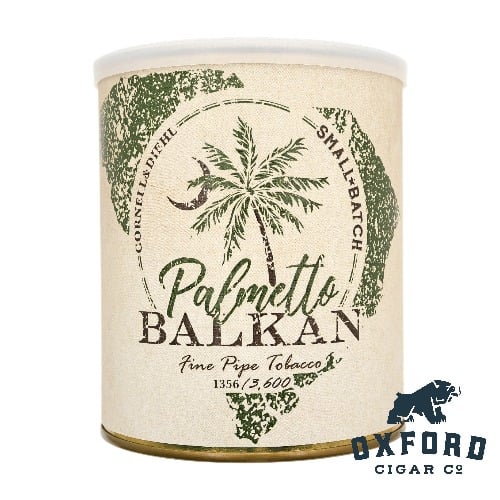
 Cornell & Diehl Small Batch Palmetto Balkan
Cornell & Diehl’s Small Batch Palmetto Balkan is an Oriental forward Balkan mixture handcrafted in small quantities at C&D’s factory in Loris, South Carolina, blended by Head Blender Jeremy Reeves. The current edition features matured 2019 Basma and 2022 Prilep Oriental varietals, top tier 2013, 2019, and 2023 Carolina Red Virginias, Turkish Latakia enhanced through a proprietary process, and Black Cavendish. The result is a ribbon cut blend that delivers wood smoke, berries, warming spices, and a wine like character that Reeves and multiple reviewers describe as reminiscent of long lost Syrian Latakia. Palmetto Balkan debuted in 2022 as a limited Small Batch release and has returned in updated editions with evolving leaf selections while maintaining its core identity: a Balkan blend that puts Orientals in the spotlight, softens the Latakia, and lets rare tobaccos speak for themselves. Tobacco Reviews gives it a 3.45 out of 4 across 11 reviews, and Jim Amash (JimInks), one of the most prolific reviewers in the pipe tobacco world, awarded the 2024 edition his highest rating of four out of four stars. Packaged in 8 ounce tins.
- Orientals (Lead Component): 2019 Basma and 2022 Prilep. In a Balkan blend, the Orientals are the focal point. Jeremy Reeves explained this in his 2024 video: “The Oriental components make up a greater percentage of the blend, and are more of a focal point in terms of how the blend translates in taste.” Previous editions used Izmir alongside Basma. The current edition replaces Izmir with Prilep, a Macedonian Oriental varietal known for its mild, slightly sweet, and gently spicy character. Basma is a Greek sun cured Oriental prized for its tart, tangy, floral, and herbal qualities. Together, the two Orientals create the blend’s signature interplay of sour, sweet, floral, and spice. Reviewer Pryhosm described the Orientals as “masterful and the star of the show” and identified a “fizzy, seltzer like” quality in the Izmir that he had only experienced in older, discontinued blends.
- Latakia (Supporting Role): Turkish Latakia, enhanced through C&D’s proprietary process. This is the blend’s most distinctive element. Syrian Latakia, once the gold standard for Balkan blends, is no longer commercially available. Reeves developed a labor intensive, time intensive proprietary process at the C&D factory to “largely remove a lot of the excess soot from the tobacco and allow a lot of the other flavors that I think were really present there to come through.” The result is a Latakia with wine like, fruity, incense like characteristics that evoke the signature qualities of Syrian leaf. Reviewer Sir Otter, who compared it directly to a vintage 1999 Dunhill Nightcap containing actual Syrian Latakia, wrote: “The blender attempted to make this blend taste like Syrian Latakia, and I’d say that this is quite successful.” Pryhosm compared it side by side with McClelland’s Wilderness (which contained both Syrian and Cypriot Latakia) and found “the same slightly sweet and tangy dry red wine flavor.” The 2024 edition switched from Cypriot to Turkish Latakia as the base, which Jim Amash noted gave the blend “a little more depth and body” and a “more obvious Oriental quality.”
- Virginia (Background): 2013, 2019, and 2023 Carolina Red Virginias. C&D grows and sources Virginia tobacco from the Carolinas, and the Red Virginias in Palmetto Balkan span a decade of crop years, meaning the oldest leaf has had over twelve years to mature. Reeves positioned the Virginias as a supporting player: “You’re not going to notice the Carolina grown Red Virginia as predominantly in a Balkan blend as you would if this was Palmetto English.” The Red Virginias provide tart and tangy citrus, dark fruit, bread, sugar, earth, and a subtle cream that grounds the blend without competing with the Orientals or Latakia. Jim Amash’s detailed review identified “tart and tangy citrus, earth, wood, grass, bread, sugar, tangy ripe dark fruit, and hints of cream and vinegar” from the Virginia component.
- Black Cavendish: Added in the current edition. Black Cavendish is Virginia tobacco that has been steamed and pressed to produce a darker, sweeter, milder leaf. Its inclusion softens the blend and adds depth, body, and a subtle natural sweetness that complements the Orientals and tames any rough edges from the Latakia.
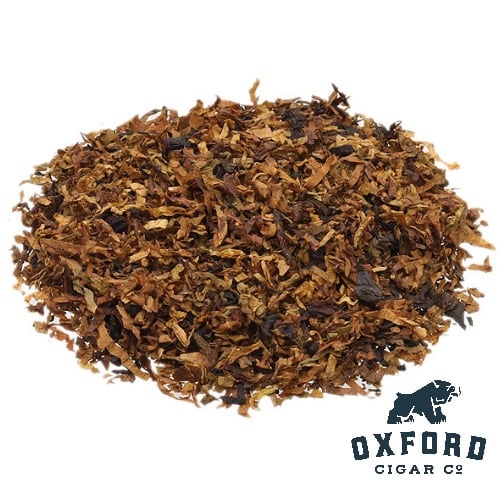
- Cut: Ribbon. C&D’s ribbon cut leans toward the finer, shag end of the spectrum. Reviewer Rustedrailsmokes described it as “C&D ribbon which is closer to the shag end of the spectrum with a variety of colors mixed throughout.” Easy to pack and light. May benefit from brief drying time out of the tin.
- Strength: Medium. Jim Amash placed it “a step below the center of medium to strong.” Multiple Tobacco Reviews users rated it mild to medium through medium. The nicotine hit sits at or slightly below the strength level. This is a blend built for flavor and complexity, not power.
What it tastes like
The tin aroma is the first signal that this blend is different from standard Balkan mixtures. The Reddit reviewer described it as “creamy, smoky, and tangy, with spices.” Pryhosm found “slightly smoky with a hint of sweetness, a sour note and some vanilla spice that is very faint and enjoyable.” Knightsmoker’s assessment: “smoky, woodsy, sweet, slightly herbal, and delicious.” That combination of smoky, sweet, sour, and herbal from the unopened tin previews the complexity that unfolds in the bowl.
The opening puffs are Oriental forward. Jim Amash’s review of the 2024 edition captured the lead components: “The tart and tangy, sun cured Basma and Izmir provide an abundance of earth, wood, herbs, dry, bitter, rough sourness, spice, vegetation, floralness, some incense, mild buttery, creamy sweetness, tart citrus, and smoke.” The Orientals take the lead from the first light. The Reddit reviewer’s experience was gentler: “The first tastes are a light almost creamy smoky flavor followed by slightly sweet dark dried fruit notes.” J. Ward found an even broader opening: “creamy, woody, lightly smoky, a slight coffee note in the aftertaste, Red Virginia sweetness with a hint of fruit, a little earthy and a very slight mineral taste.” The variation between reviewers reflects the complexity of the blend. Every palate finds a different door into the same room.
The middle of the bowl is where the proprietary Latakia process makes itself known. Jim Amash described its contribution: “plenty of floralness, herbs, incense, earth, wood, smoke, tangy dark fruit, red wine like sweetness, spice, some leather, and soft feel.” The wine like character is the signature. Multiple reviewers independently used “wine like” or “dry red wine” to describe the Latakia’s effect, the same descriptor historically associated with Syrian Latakia. J. Ward tracked a shift at the midpoint: “a little less Red VA fruit sweetness, more wood, gentle smoky note, slightly more mineral taste, and an almost dark chocolaty aftertaste. Still creamy, Oriental forward.” The Orientals never cede the lead, but the Latakia grows in presence and the Virginia sweetness recedes slightly, creating a darker, more contemplative middle section.
The final portion of the bowl sustains quality through to the heel. J. Ward: “It became a bit more earthy, woody, and slightly less creamy. A bit more strength, mineral note still present, mild Red VA sweetness, with buttery Orientals. Only the very bottom of the bowl had a slight rough edge.” Jim Amash found the blend “burns cool and clean at a reasonable rate with a very consistent floral, sour, spicy, sweet and smoky, lightly rough, very zesty, savory quality that extends to the pleasantly lingering after taste.” The consistency is a defining trait. Palmetto Balkan does not collapse in the second half of the bowl the way many Balkan blends do. The flavors evolve but they do not degrade.
The Syrian Latakia question
Syrian Latakia is the ghost that haunts every modern Balkan blend. For decades, Syrian Latakia was the prized condiment in mixtures like Balkan Sobranie, Dunhill Nightcap, and McClelland’s Wilderness. It was made from the shekk el bint Oriental varietal, fire cured over aromatic woods and herbs in Syria. The resulting leaf had a wine like, fruity, incense rich character that Cypriot Latakia, made from different Oriental varietals using different wood, could not replicate. Syrian production ceased due to political instability, agricultural decline, and supply chain collapse. Jeremy Reeves addressed this directly: “Syrian Latakia, based on the shekk el bint Oriental varietal, simply is not available in any sort of quantity that a manufacturer might be able to really make use of these days.”
Reeves’s response was to develop a proprietary process at the C&D factory. He described it as removing “a lot of the excess soot from the tobacco” to “allow a lot of the other flavors that I think were really present there to come through.” The specific method is undisclosed, but the goal is clear: strip away the heavy campfire character of standard fire cured Latakia to reveal the wine like, fruity, incense like notes underneath. The 2024 edition switched from Cypriot to Turkish Latakia as the base, which Reeves said brought “some interesting, less smoky, and more Oriental forward character to the Latakia itself.” The reviewers who compared Palmetto Balkan directly to blends containing actual Syrian Latakia found legitimate similarities. Pryhosm’s side by side with McClelland’s Wilderness identified “the same slightly sweet and tangy dry red wine flavor.” Sir Otter’s comparison to vintage 1999 Dunhill Nightcap concluded: “this is quite successful.” These are not casual comparisons. These are experienced pipe smokers testing the claim against real Syrian benchmarks.
The Small Batch series
Cornell & Diehl’s Small Batch series consists of limited production blends handcrafted in small quantities at their South Carolina factory. Each Small Batch release is blended by Jeremy Reeves using specific vintage crop year tobaccos that are available in limited supply. The original Palmetto Balkan (2022) was limited to 3,000 eight ounce tins. The 2024 edition produced 2,800 tins. Each edition uses different crop year tobaccos, meaning no two editions are identical. The 2022 original featured 2018 Izmir and 2019 Basma with 2017 and 2019 Carolina Red Virginias and Cypriot Latakia. The 2024 edition kept the same Orientals and Virginias but switched to Turkish Latakia. The current edition introduces 2022 Prilep in place of Izmir, adds 2013 and 2023 Carolina Red Virginias, and includes Black Cavendish. Other Small Batch releases include Palmetto English, Steamworks, and blends in the From Beyond series. The “Palmetto” name refers to South Carolina’s nickname, the Palmetto State, reflecting C&D’s pride in the proprietary process they developed at their factory.
Edition comparison
| Detail | 2022 (Original) | 2024 | Current |
|---|---|---|---|
| Orientals | 2018 Izmir, 2019 Basma | 2018 Izmir, 2019 Basma | 2019 Basma, 2022 Prilep |
| Virginias | 2017, 2019 Carolina Red | 2017, 2019 Carolina Red | 2013, 2019, 2023 Carolina Red |
| Latakia | Cypriot (proprietary process) | Turkish (proprietary process) | Turkish (proprietary process) |
| Black Cavendish | No | No | Yes |
| Production | 3,000 tins | 2,800 tins | Limited |
| Jim Amash Rating | 3/4 | 4/4 | Pending |
Each edition is a distinct blend sharing the same philosophy: Oriental forward, proprietary processed Latakia, Carolina Red Virginia support, and a wine like character evoking Syrian Latakia. The 2024 edition’s switch to Turkish Latakia was the most significant change, prompting Jim Amash to upgrade his rating from three to four stars. He described the 2024 as “a more ‘stand out in the crowd’ blend” with “a little more depth and body from the Turkish Latakia.” The current edition’s introduction of Prilep and Black Cavendish represents the blend’s continued evolution, with the Black Cavendish likely adding depth and mellowing the profile.
Jeremy Reeves and Cornell & Diehl
Jeremy Reeves is the Head Blender of Cornell & Diehl Pipe Tobacco Company, based in Loris, South Carolina. C&D is one of America’s most respected pipe tobacco manufacturers, known for crafting blends by hand in small batches using vintage, aged, and carefully sourced tobaccos. Reeves brings a blender’s obsession with specific crop years, varietal selections, and processing techniques. His approach to Palmetto Balkan is characteristic: rather than accepting that Syrian Latakia is gone forever, he developed a proprietary process to chase its character through available materials. His YouTube presentations for each Small Batch release provide detailed explanations of the tobaccos, the processing decisions, and the creative intent behind each blend. C&D’s factory at 3750 Ralph Ellis Blvd in Loris, South Carolina, is where every Small Batch blend is handcrafted. The company’s portfolio spans English, Balkan, Virginia, Virginia Perique, Burley, and aromatic blends, with the Small Batch series representing the most experimental and limited offerings.
Aging potential
Palmetto Balkan is a strong candidate for cellaring. Reeves addressed this directly: “It’s going to age well. There’s plenty of natural sugar in the Latakia, the Virginia, and the Oriental to aid in fermentation.” The blend already contains tobaccos spanning multiple crop years (the current edition’s 2013 Carolina Red Virginia has over twelve years of age), meaning some fermentation has already occurred before the tin is sealed. Pryhosm wrote: “I am looking forward to aging this blend almost as much as I am looking forward to the next bowl.” Puffaluffaguss described returning to a jarred original edition after two years: “The Syrian like quality of the Latakia was not as wine like as when fresh but it was very smooth and incense like, creamy on the tongue and almost like an aged Syrian blend where the Latakia is toned down but evened out.” Balkan blends with quality Orientals and Virginias tend to mellow, integrate, and develop new sweetness over time. The 8 ounce tin size supports cellaring: seal it, set it aside, and revisit it in one, two, or five years.
Who this is for
The Reddit reviewer offered the most practical recommendation: “I would highly recommend this to any experienced smokers that enjoy Latakia, bolder Orientals, and a spicy smoky smooth smoke. I also think this blend would be great for anyone less experienced with these blends and wanting to get their feet wet with Balkans.” The medium strength, the softened Latakia, and the Oriental forward design make Palmetto Balkan more approachable than heavy English blends while still delivering genuine complexity. If you have fond memories of Balkan Sobranie, McClelland’s Wilderness, or any Syrian Latakia era blend, Palmetto Balkan is the closest modern tribute available from a major manufacturer. If you are new to Balkans and want to understand why experienced pipe smokers mourn Syrian Latakia, this blend is designed to show you.
Pairings
Palmetto Balkan’s wine like Latakia, tart and floral Orientals, and sweet Red Virginia base pair naturally with beverages that complement smoky, fruity, and spicy flavors. A dry red wine (Pinot Noir, Côtes du Rhône, Tempranillo) is the most direct pairing: the blend’s wine like Latakia character literally echoes dry red wine, creating a seamless loop between glass and pipe. A single malt Scotch with light peat (Highland Park 12, Talisker 10) mirrors the blend’s wood smoke and incense without overpowering the delicate Orientals. A medium roast coffee or pour over brings out the bread, sugar, and earth notes from the Carolina Red Virginias. A black tea (Lapsang Souchong for smoke, or Darjeeling for floral) picks up the blend’s dominant characteristics: the smoky, floral, and tangy notes that define Palmetto Balkan’s personality. An amontillado or oloroso sherry brings nutty, oxidized, dried fruit character that complements the dark fruit and spice. For something simpler, a sparkling water with lemon cleanses the palate between puffs and lets the blend’s complexity reset with each sip.
| SPECIFICATION | DETAILS |
|---|---|
| Brand | Cornell & Diehl |
| Series | Small Batch |
| Blend Name | Palmetto Balkan |
| Blend Type | Balkan |
| Components | 2019 Basma, 2022 Prilep, Turkish Latakia (proprietary process), 2013/2019/2023 Carolina Red Virginias, Black Cavendish |
| Cut | Ribbon |
| Blended By | Jeremy Reeves, Head Blender |
| Manufactured By | Cornell & Diehl, Loris, South Carolina |
| Country | United States |
| Strength | Medium |
| Taste | Medium to Full |
| Room Note | Tolerable |
| Flavoring | None |
| Packaging | 8 ounce tin |
| Production | Limited (Small Batch) |
| Tobacco Reviews Rating | 3.45 / 4 (11 reviews) |
| Jim Amash Rating (2024 Edition) | 4 / 4 |
| Core Flavor Notes | Wood smoke, berries, oak, baking spices, wine like Latakia, tart citrus, dark fruit, earth, floral, herbs, incense, cream, butter, leather, bread, sugar, spice, mineral, vegetation, campfire, tangy sourness, vanilla spice, coffee, dark chocolate |
Quick specs
- Blend Type: Balkan (Oriental forward)
- Components: 2019 Basma, 2022 Prilep, Turkish Latakia (proprietary), 2013/2019/2023 Carolina Red Virginias, Black Cavendish
- Cut: Ribbon
- Strength: Medium
- Taste: Medium to Full
- Blender: Jeremy Reeves
- Packaging: 8 ounce tin
- Production: Limited Small Batch
What is Cornell & Diehl Palmetto Balkan?
An Oriental forward Balkan pipe tobacco blend from Cornell & Diehl’s limited Small Batch series. Features 2019 Basma and 2022 Prilep Orientals, Turkish Latakia enhanced through a proprietary process to evoke Syrian Latakia’s wine like character, 2013/2019/2023 Carolina Red Virginias, and Black Cavendish. Ribbon cut. Blended by Jeremy Reeves at C&D’s factory in Loris, South Carolina. 8 ounce tins. 3.45 out of 4 on Tobacco Reviews across 11 reviews.
What does Palmetto Balkan taste like?
Oriental forward with tart, tangy, floral Basma and Prilep leading the blend. Wood smoke, berries, oak, baking spices, and a wine like character from the proprietary processed Turkish Latakia. Carolina Red Virginias add dark fruit, bread, sugar, citrus, and cream in the background. Jim Amash described it as “floral, sour, spicy, sweet and smoky, very zesty, savory.” J. Ward found “creamy, woody, lightly smoky with a slight coffee note and a dark chocolaty aftertaste.”
What is the proprietary Latakia process?
Jeremy Reeves developed a labor intensive process at C&D’s South Carolina factory to remove excess soot from fire cured Latakia, revealing wine like, fruity, and incense like characteristics underneath. The specific method is undisclosed. The goal is to replicate qualities of Syrian Latakia, which is no longer commercially available. Reviewers who compared Palmetto Balkan directly to blends containing actual Syrian Latakia confirmed legitimate similarities.
How does Palmetto Balkan compare to Syrian Latakia blends?
Reviewer Pryhosm compared it side by side with McClelland’s Wilderness (which contained both Syrian and Cypriot Latakia) and found “the same slightly sweet and tangy dry red wine flavor.” Sir Otter compared it to a vintage 1999 Dunhill Nightcap with actual Syrian Latakia and wrote: “I’d say that this is quite successful.” The wine like and fruity character of the proprietary processed Latakia is the closest commercially available approximation of Syrian Latakia from a major manufacturer.
How strong is Palmetto Balkan?
Medium strength. Jim Amash placed it “a step below the center of medium to strong.” Taste runs medium to full. Nicotine sits at or slightly below the strength level. Multiple reviewers rated it mild to medium through medium. Approachable enough for smokers new to Balkan blends, complex enough for experienced smokers seeking Syrian era character.
Does Palmetto Balkan age well?
Yes. Jeremy Reeves confirmed: “It’s going to age well. There’s plenty of natural sugar in the Latakia, the Virginia, and the Oriental to aid in fermentation.” The current edition already contains 2013 Carolina Red Virginia with over twelve years of age. The 8 ounce tin supports long term cellaring. Experienced reviewers reported positive aging results from the original 2022 edition.
Who blends Palmetto Balkan?
Jeremy Reeves, Head Blender of Cornell & Diehl Pipe Tobacco Company. Based in Loris, South Carolina. Reeves personally selects the crop year tobaccos, developed the proprietary Latakia process, and handcrafts each Small Batch release. He provides detailed video explanations for each edition on C&D’s YouTube channel.
What pairs well with Palmetto Balkan?
Dry red wine (Pinot Noir, Côtes du Rhône), single malt Scotch with light peat (Highland Park 12, Talisker 10), medium roast coffee, pour over, Lapsang Souchong tea, Darjeeling tea, amontillado or oloroso sherry, or sparkling water with lemon. The blend’s wine like Latakia, floral Orientals, and sweet Virginia base pair with smoky, fruity, and tangy beverages.
| Selection | 8oz Tin |
|---|
Share your thoughts!
Let us know what you think...
Only logged in customers who have purchased this product may leave a review. Log in now
Related products




What others are saying
There are no contributions yet.