


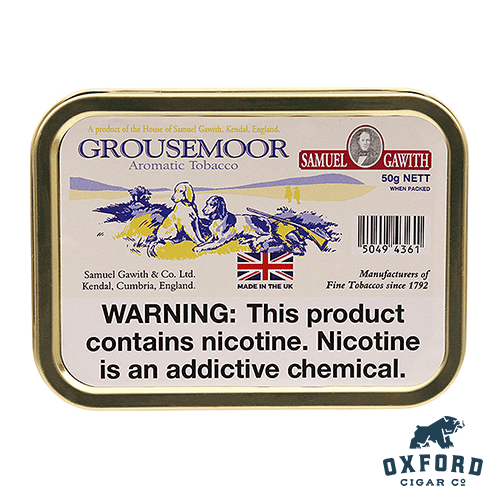
Samuel Gawith Grousemoor Pipe Tobacco
Samuel Gawith Grousemoor is a Lakeland aromatic made from hand stripped, flue cured Zimbabwe leaf that is steamed to a golden color, then stoved into what Samuel Gawith calls “a unique melange of flavors.” The official description captures the blend’s heritage: “This 200 year old blend is comprised of hand-stripped flue-cured Zimbabwe leaf, steamed to a Golden color then stoved into a unique melange of flavors. The aroma is of Lemon Grass.” It is ribbon cut, lightly topped with natural essences in the Lakeland tradition, and manufactured at the Kendal Brown House in Kendal, England. Grousemoor is one of the most polarizing tobaccos Samuel Gawith produces, and that polarization is the point. The Lakeland essence (a blend of floral and herbal oils including geranium, rose, and lavender) is not a flavoring designed to mask inferior tobacco. It is an overlay on genuinely excellent Virginia leaf, and that combination of quality tobacco and distinctive aromatic topping is what defines Lakeland pipe tobacco. One Pipes Magazine forum reviewer put it beautifully: “It’s almost as if the Samuel Gawith blenders of old had asked the Virginia to take on a role of a lifetime. Stretch yourself to the utmost limit without losing who you really are. Be a little over the top, with lots of character but also refined.” A Reddit commenter said simply: “It tastes like lavender, rosemary, honey, and citrus to my palate.” The Tobacco Pipe Blog called Grousemoor “surreal” and noted “not even the slightest scintilla of tongue bite.” Available in 50g tins.
- Hand stripped, flue cured Zimbabwe Virginia, steamed to a golden color and then stoved (baked) to deepen flavor and remove bite. The base tobacco is genuine, high quality Virginia leaf, not a neutral filler carrying a heavy topping.
- Lakeland essence topping of natural floral and herbal oils. Reviewers identify lavender, rosemary, rose geranium, lemongrass, citrus, cedar bloom, and honey. The topping is light enough that the Virginia character shows through, especially in the second half of the bowl.
- Ribbon cut (shag like), light and fluffy with a lemon gold color. One reviewer described the feel as “almost like velvet.” Packs easily but requires longer, fuller puffs than most tobaccos to stay lit.
- No tongue bite. Multiple reviewers independently confirm: Grousemoor does not bite. The steaming and stoving process eliminates the harshness that Virginia tobaccos can produce, and the result is one of the smoothest smoking experiences in the Samuel Gawith range.
- Burns extremely cool. One reviewer reported his pipe was “barely warm during entire smoke except at the very end,” making Grousemoor one of the coolest burning tobaccos in the Samuel Gawith lineup.
- Medium strength with enough nicotine to satisfy. One Pipes Magazine forum reviewer called it “an excellent Virginia tobacco with notes of citrus and honey, and newly mown hay, with enough nicotine to satisfy my need for Vitamin N.”
- Intoxicating room note: perfumed, floral, sweet, and inviting. The Tobacco Pipe Blog called the room note “intoxicating.” Non smokers in the room tend to respond positively to Grousemoor’s floral room note.
- Manufactured at the Kendal Brown House by Samuel Gawith, one of the oldest tobacco manufacturers in the world, producing tobacco in Kendal, England since 1792.
What Lakeland means
Lakeland pipe tobacco is a style, not a single blend. It refers to the distinctive floral, herbal, and sometimes soapy aromatic character found in tobaccos produced in the Kendal area of England’s Lake District by Samuel Gawith and Gawith Hoggarth. The Lakeland essence is a topping of natural oils, primarily rose geranium, lavender, and other floral extracts, that has been applied to Kendal tobaccos for generations. One TobaccoReviews commenter explained: “The Lakeland scent is often experienced as perfumey floral. It’s often heavy on geranium and rose essence. People call it ‘soapy’ sometimes. But many enjoy.” The origin of this tradition may trace to a time when flavoring tobacco with conventional ingredients was restricted in certain ways, but flower oils and alcohol based extracts were permitted.
Grousemoor is a Lakeland aromatic, but it sits at the gentler end of the spectrum. Compared to Gawith Hoggarth’s Ennerdale Flake or No Name, Grousemoor’s Lakeland character is lighter and more subtle. The Tobacco Pipe Blog made this distinction directly: “There’s floral notes, but not Ennerdale’s heavy Lakeland essence. No, this is more like a single, sweet smelling flower, rather than a large bouquet.” If you have been curious about Lakeland tobaccos but afraid of being overwhelmed by perfume, Grousemoor is a measured, approachable entry point. If you already love the Lakeland style, Grousemoor delivers a refined, Virginia forward expression of it.
Smoking experience
The tin note divides opinion immediately and predictably. One Pipes Magazine reviewer described it as “like a well dressed lady wearing just a little too much perfume.” Another smelled “a cedar tree in bloom.” The lemongrass and citrus are apparent in the tin aroma, and the floral Lakeland essence sits on top with an intensity that may surprise first time Lakeland smokers. The tobacco itself is beautiful: light, lemon gold, ribbon cut Virginia that feels soft and silky between the fingers. It packs easily into a bowl but feels lighter and fluffier than most ribbon cuts.
The first light brings tangy citrus and a soft, almost medicinal quality that the Tobacco Pipe Blog described as “surreal.” The floral character is present from the first puff, but it reads as a single, sweet smelling flower rather than a heavy perfume. The Virginia’s natural sweetness, hay, and lemongrass emerge immediately alongside the Lakeland topping. Retrohales are warm and spicy with an invigorating quality. The smoke is creamy and round from the very beginning, with a rich but not heavy body. There is no bite, no harshness, and no tongue sting.
The second half of the bowl is where Grousemoor rewards patience. The Tobacco Pipe Blog captured this transition precisely: “The second half of the bowl sees the flavorings mellow out. They’re replaced by that typically sophisticated Virginia tobacco flavor that one expects and desires from Samuel Gawith blends. Hints of orange citrus keep company, and that perfumed room note remains intoxicating. But fantastic, classic, straight Virginia flavor is the final reward.” A light smoky peat flavor appears at the end, and the Virginia’s grassy, honeyed sweetness becomes the dominant character. The floral Lakeland essence never disappears entirely, but it recedes enough that the tobacco itself takes center stage. This is what separates Grousemoor from lesser aromatics: the base tobacco is good enough to carry the bowl on its own once the topping fades.
One practical note from multiple reviewers: Grousemoor requires longer, fuller puffs than most tobaccos to stay lit. The light, fluffy ribbon cut and the low burn temperature mean you may need to relight more frequently, especially if you are a gentle sipper. This is not a flaw. The cool burning temperature is part of what makes Grousemoor so smooth and bite free. Adjust your cadence and enjoy the ride.
Steamed and stoved Virginias
The Virginia in Grousemoor undergoes two processing steps before the Lakeland topping is applied. First, the hand stripped, flue cured Zimbabwe leaf is steamed, a moisture and heat treatment that softens the leaf, removes compounds that cause tongue bite, and lightens the color to a golden hue. Then the steamed Virginia is stoved (baked), a heat process that further matures the leaf and develops a toasty, slightly caramelized depth in the natural sugars. The result is a Virginia base that smokes cool, smooth, and sweet, with a refined character that distinguishes it from raw, unprocessed Virginia. Samuel Gawith’s use of Zimbabwe Virginia is itself notable. Zimbabwe (formerly Rhodesia) produced some of the finest flue cured Virginia leaf in the world, and its tobacco was prized for its bright, clean sweetness and excellent burning qualities.
Grousemoor and the moors
The name “Grousemoor” evokes the grouse moors of northern England, the heather covered uplands where red grouse are hunted. Kendal sits at the edge of this landscape, and the Gawith family has been part of the Lake District community for over two centuries. BNB Tobacco’s description captures the connection: “Flavours reminiscent of springtime on the moors with medium, sweet grassy notes.” The lemongrass, wildflower, and herbal character of the Lakeland topping is not an arbitrary flavoring choice. It is an aromatic portrait of the English countryside that surrounds the factory where the tobacco is made. The name, the topping, and the location are all part of the same story.
Will it ghost my pipe?
Yes. Lakeland tobaccos are infamous for ghosting, and Grousemoor will leave a floral, perfumy residue in a briar pipe that can persist for months or longer. One Reddit commenter confirmed: “I understand Lakeland tobaccos tend to ghost pipes like mad.” If you enjoy Grousemoor and want to explore other Lakeland blends, dedicate a pipe to Lakeland tobaccos. A corn cob is an affordable option for testing whether you enjoy the style before committing a briar. Meerschaum does not ghost and is an excellent vessel for Grousemoor. Once a pipe has been ghosted with Lakeland essence, many smokers find the ghost actually enhances subsequent Lakeland bowls, creating a “seasoned” pipe that deepens the floral character.
Lakeland aromatics from Samuel Gawith
| Blend | Base Tobacco | Lakeland Intensity | Character |
|---|---|---|---|
| Grousemoor | Steamed and stoved Zimbabwe Virginia | Light to moderate | Floral, citrus, lemongrass, honey, refined and approachable |
| Kendal Cream Flake | Virginia flake | Light | Creamy, sweet, gentle Lakeland accent |
| Bracken Flake | Virginia and Burley flake | Moderate | Nuttier, earthier, more pronounced floral |
| Firedance Flake | Virginia flake | Moderate to heavy | Stronger floral, incense, more assertive topping |
Pairings
Grousemoor’s floral, citrusy, honeyed character opens up pairing possibilities that most pipe tobaccos cannot access. A Speyside single malt Scotch whisky (Macallan, Glenlivet, Balvenie) with its honeyed, floral, fruit forward character is a natural match. The Tobacco Pipe Blog specifically suggested Speyside over Islay. A gin and tonic made with a floral, botanical gin amplifies Grousemoor’s lavender and herbal qualities. Earl Grey tea, with its bergamot citrus and floral character, creates one of the most elegant pairings possible. A light honey mead or elderflower liqueur leans into the floral sweetness. For coffee, a light roast Ethiopian pour over with its bright, floral, citrusy notes mirrors the Grousemoor profile. Avoid heavy, dark, smoky pairings (peated Scotch, espresso, stout) that will overpower the blend’s delicate character.
| Brand | Samuel Gawith |
|---|---|
| Product | Grousemoor |
| Blend Type | Aromatic (Lakeland) |
| Components | Hand stripped, flue cured Zimbabwe Virginia (steamed and stoved), Lakeland essence topping |
| Topping | Natural floral and herbal essences (Lakeland tradition) |
| Cut | Ribbon (shag like) |
| Country | United Kingdom (Kendal, England) |
| Factory | The Kendal Brown House |
| Strength | Medium |
| Taste | Medium |
| Room Note | Pleasant to strong (floral, perfumed, intoxicating) |
| Tin Size | 50g |
| Core Flavor Elements | Lavender, rosemary, lemongrass, citrus, honey, newly mown hay, cedar bloom, rose geranium, grassy Virginia sweetness, orange, light smoky peat (final third), creamy mouthfeel |
Quick specs
- Blend Type: Aromatic (Lakeland)
- Components: Zimbabwe Virginia (steamed and stoved), Lakeland essence
- Cut: Ribbon
- Strength: Medium
- Taste: Medium
- Tin Size: 50g
What is Samuel Gawith Grousemoor?
It is a Lakeland aromatic made from hand stripped, flue cured Zimbabwe Virginia that is steamed to a golden color, stoved, and topped with natural Lakeland essences. The aroma is of lemongrass. A 200 year old blend made at the Kendal Brown House in Kendal, England. Available in 50g tins.
What does Grousemoor taste like?
Lavender, rosemary, lemongrass, citrus, and honey over a grassy, sweet Virginia base. The floral Lakeland topping is present in the first half but mellows in the second half, revealing “fantastic, classic, straight Virginia flavor” underneath. One Reddit commenter described it as “lavender, rosemary, honey, and citrus.” Zero tongue bite. Creamy, smooth, cool burning.
What is a Lakeland tobacco?
Lakeland refers to the distinctive floral, herbal aromatic style produced by Samuel Gawith and Gawith Hoggarth in Kendal, England, on the edge of the Lake District. The Lakeland essence is a topping of natural oils including rose geranium, lavender, and other floral extracts that has been used in Kendal tobaccos for generations.
Is Grousemoor heavily perfumed?
No. Grousemoor sits at the lighter end of the Lakeland spectrum. The Tobacco Pipe Blog described its floral character as “more like a single, sweet smelling flower, rather than a large bouquet,” and compared it favorably to the heavier Lakeland essence in Ennerdale Flake. It is one of the most approachable Lakeland tobaccos for newcomers.
Will Grousemoor ghost my pipe?
Yes. Lakeland tobaccos ghost pipes persistently. Dedicate a pipe to Lakeland blends if you enjoy the style. A corn cob or meerschaum (which does not ghost) are good options for trying Grousemoor before committing a briar.
Does Grousemoor bite?
No. Multiple reviewers independently confirm zero tongue bite. The Tobacco Pipe Blog wrote: “not even the slightest scintilla of tongue bite.” The steaming and stoving process eliminates harshness entirely.
Does Grousemoor require special technique?
Yes. Grousemoor requires longer, fuller puffs than most tobaccos to stay lit. The light, fluffy ribbon cut and extremely cool burn temperature mean frequent relights if you are a gentle sipper. This is part of its character, not a defect. Pack lightly and adjust your cadence.
What pairs well with Grousemoor?
Speyside single malt Scotch, gin and tonic with floral gin, Earl Grey tea, light honey mead, elderflower liqueur, light roast Ethiopian pour over coffee. Avoid heavy, dark, smoky pairings that overpower the blend’s delicate floral, citrus, and honey character.
| Selection | 50g Tin |
|---|
Share your thoughts!
Let us know what you think...
Only logged in customers who have purchased this product may leave a review. Log in now
Related products


What others are saying
There are no contributions yet.