


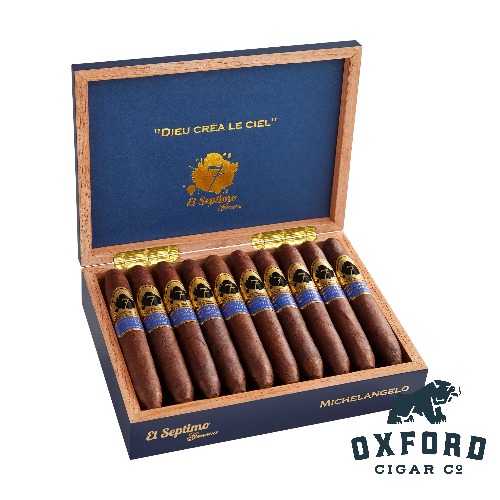
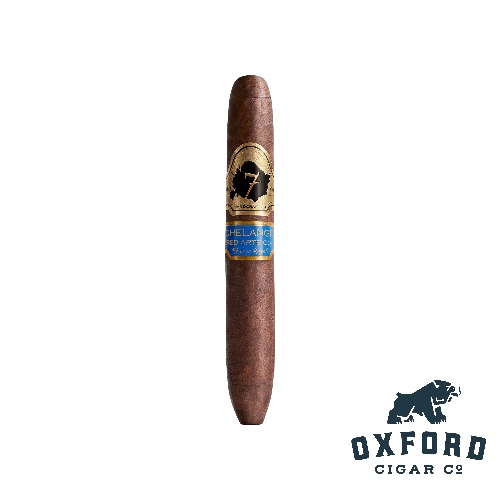

El Septimo Michelangelo
El Septimo Michelangelo is a perfecto from the Sacred Arts Collection that channels the creative spirit of the Renaissance master through a powerful, complex smoking experience demanding contemplation and respect. Part of a seven cigar line inspired by Western civilization’s greatest painters, the Michelangelo represents the second day of creation and delivers strong, spicy initial puffs that evolve into complex notes of minerals, leather, mocha, and a persistent charry burnt coffee character. Handcrafted at the Tabacos de Costa Rica factory, this cigar showcases El Septimo’s dedication to luxury craftsmanship and bold, assertive flavor profiles.
- Part of the Sacred Arts Collection, a seven cigar line where each blend honors a master painter and represents a day of biblical creation.
- Perfecto vitola measuring 5 1/2 inches by 50 ring gauge, referred to by El Septimo as the Eagle size.
- Features an undisclosed proprietary wrapper with Habano Ecuador binder and filler tobaccos from Dominican Republic, Ecuador, and Nicaragua.
- Delivers bold opening puffs with spice and pepper that transition into mocha, minerals, leather, and charry burnt coffee notes.
- Builds from medium strength to medium full by the final third, with body following a similar progression for a robust, challenging smoke.
- Handmade at El Septimo’s own Tabacos de Costa Rica factory, reflecting the brand’s commitment to luxury cigar production.
The Sacred Arts Collection represents El Septimo’s artistic vision for premium cigars, with each of the seven blends dedicated to a legendary painter and crafted to reflect the spirit of their iconic masterpieces. The Michelangelo takes its name from the Italian Renaissance sculptor and painter whose works like the Sistine Chapel ceiling and David remain among humanity’s greatest artistic achievements. The cigar embodies that bold, uncompromising creative vision through a flavor profile that challenges and rewards in equal measure, refusing to play it safe or deliver a one dimensional experience.
El Septimo keeps the specific wrapper undisclosed as part of their proprietary approach to blending, though the binder is Habano Ecuador, a Cuban seed tobacco grown using traditional methods that contributes body and spice. The filler combines tobaccos from Dominican Republic, Ecuador, and Nicaragua, creating a multi regional foundation that builds complexity and depth. The perfecto shape adds another dimension to the smoking experience, with the tapered head and foot creating natural variations in draw and flavor concentration as you work through the cigar.
In the smoking experience, the Michelangelo opens with strong, spicy character that announces itself immediately. Early puffs deliver red pepper, earth, cedar, and mineral notes that set an assertive tone. As the cigar develops, mocha emerges as a prominent feature, fusing coffee and chocolate into a rich, satisfying note that many reviewers identify as the highlight of the first half. The mineral component persists throughout, adding a rocky, elemental quality that grounds the sweeter mocha notes. The retrohale carries additional red pepper that intensifies the spice without overwhelming.
The second half transitions toward darker, more intense territory. The mocha notes shift to pure black coffee, while earth, mineral, and red pepper all increase in intensity. Cedar remains present as a supporting note, adding woody structure beneath the bolder flavors. By the final third, the mineral notes move to the forefront and the charry, burnt coffee character becomes most pronounced, adding dramatic flair that defines the finish. This progression creates what reviewers describe as a tale of two cigars, with the sweeter mocha first half giving way to a more intense, mineral driven conclusion.
Strength builds from medium in the opening to medium full by the final third, with body following a similar trajectory. This progression means the Michelangelo starts accessible but finishes with authority, making it better suited for experienced smokers who appreciate cigars that challenge and evolve. Construction is typically excellent, with solid ash, even burn, and good smoke production throughout. The perfecto shape requires attention to lighting and puffing cadence, but rewards that attention with a dynamic smoking experience.
| Brand | El Septimo |
| Collection | Sacred Arts Collection |
| Cigar Name | Michelangelo |
| Vitola | Perfecto (Eagle) |
| Length | 5 1/2 inches |
| Ring Gauge | 50 |
| Wrapper | Undisclosed / Proprietary |
| Binder | Habano Ecuador |
| Filler | Dominican Republic, Ecuador, Nicaragua |
| Country of Origin | Costa Rica |
| Factory | Tabacos de Costa Rica |
| Strength | Medium to Medium Full |
| Body | Medium to Medium Full |
| Flavor Profile | Mocha, mineral, earth, red pepper, cedar, leather, black coffee, charry burnt coffee |
| Box Count | 20 |
Summary
- Box Count: 20
- Region: Costa Rica
- Strength: Medium to Medium Full
- Binder: Habano Ecuador
- Wrapper: Undisclosed / Proprietary
- Filler: Dominican Republic, Ecuador, Nicaragua
What is the Sacred Arts Collection?
The Sacred Arts Collection is a seven cigar line from El Septimo inspired by Western civilization’s greatest painters and their iconic masterpieces. Each cigar features a unique blend, vitola, and price point, representing one of the seven days of biblical creation. The collection includes cigars named for Leonardo da Vinci, Michelangelo, Raphael, Salvador Dali, Rembrandt, Van Gogh, and Botticelli.
Why is the wrapper undisclosed?
El Septimo maintains proprietary secrecy around their wrapper selections as part of their luxury branding approach. The company uses undisclosed wrappers with proprietary aging processes across multiple lines, creating an air of exclusivity while protecting their blending techniques. The focus remains on the finished smoking experience rather than component transparency.
What flavors should I expect?
The Michelangelo opens with strong spice, red pepper, earth, and cedar, then develops prominent mocha notes that fuse coffee and chocolate. Mineral character persists throughout, adding rocky, elemental depth. The second half transitions to black coffee and intensified earth and pepper, culminating in a charry burnt coffee finish that defines the final third.
Is the Michelangelo suitable for newer cigar smokers?
The Michelangelo builds from medium to medium full strength with bold, spicy character and mineral intensity that makes it better suited for experienced smokers. The assertive pepper, evolving mineral notes, and charry finish challenge the palate in ways that may overwhelm newer enthusiasts still developing their preferences.
How does the perfecto shape affect the smoke?
The perfecto shape features tapered head and foot that create natural variations in draw and flavor concentration. The narrow ends require careful lighting and controlled puffing to establish even burn, while the wider middle section delivers fuller smoke production. This dynamic shape rewards attention and creates an evolving experience beyond what standard vitolas offer.
How does the Michelangelo compare to other Sacred Arts cigars?
Each Sacred Arts cigar features a unique blend and vitola tailored to its artistic namesake. The Michelangelo at 5 1/2 by 50 perfecto delivers bold, mineral driven character, while the Leonardo da Vinci is a 7 1/2 by 40 lancero and the Raphael is a 6 by 50 robusto extra. Pricing ranges from $15 for Raphael to $38 for Van Gogh, with Michelangelo at $18.
What drinks pair well with the Michelangelo?
The mocha and black coffee notes pair beautifully with espresso, dark roasted coffee, or strong black coffee that echo the cigar’s flavor profile. The mineral and pepper character works well with aged rum, bourbon, or rye whiskey. The charry finish complements peaty Scotch or smoky mezcal, while the cedar notes match nicely with aged tequila.
Does the Michelangelo age well?
Cigars with Habano Ecuador binder and multi regional filler age well with proper storage. The bold pepper and mineral notes typically mellow, the mocha becomes richer and more integrated, and the overall profile gains smoothness. Six months to a year of rest can soften the more aggressive elements while enhancing complexity.
| Selection | Box – Michelangelo 5 1/2 x 50, 5 Pack – Michelangelo 5 1/2 x 50, Single – Michelangelo 5 1/2 x 50 |
|---|
Share your thoughts!
Let us know what you think...
Only logged in customers who have purchased this product may leave a review. Log in now
Related products

Viaje Chef’s Cut and Private Keep Ghost Preferred Retailer Sampler


What others are saying
There are no contributions yet.